
Is Scavland death a full save wipe?
No. Community guides: backpack drops at a beacon; stash stays 100% safe. Character wipe is not the Steam pitch.

Scavland death drops the backpack at a recoverable beacon; the stash stays 100% safe. Kit a return and recover loot without dying twice on the walk back.
Death, backpack risk, and why the stash matters.
~11 min read
Scavland death is a backpack problem, not a save wipe. Community wiki language is consistent: when you go down, the pack drops at a recoverable beacon you can walk back to. The safehouse stash stays 100% safe. This page is how backpack recovery works in Early Access, what Steam’s known-issue note changes, and why an empty-kit sprint is how you donate the same loot twice. Scavland from NoShadow is a hardcore top-down pixel survival RPG. Verified September 6, 2026. Death drops backpack (stash is safe).
Act I is still solo. Co-op is planned, not a buddy corpse run. Pair this with the beginner guide so the first extract actually reaches stash, then survival before you walk into radiation, night, or Mist to pick the bag up.
| Fact | Detail | Evidence |
|---|---|---|
| What dies | You drop. The run ends. The save is not deleted. | Steam loop + community |
| Backpack | Drops at a recoverable beacon-style marker. | Community wiki — verify HUD in your build |
| Stash | Safehouse stash is 100% safe. | Community wiki / field guides |
| Bodies vs saves | Steam known issue: dead bodies are not saved in save files. | Steam — re-check current build |
| Co-op pickup | Not in Act I. Solo recovery only. | Official EA scope |
| Second death | Do not assume the first bag waits forever. Overwrite / despawn TBA. | Verify in-session |
| Related | Survival · loot · beginner guide | This wiki |
Matched by build plan, shared topics, and guide progression — not random related links.
Steam sells a hardcore loop: ammunition is scarce, guns jam, radiation is everywhere, and preparation decides whether you return at all. It does not sell a character-wipe permadeath of the whole save. Scavland death in community field guides is the extraction-shooter pattern: the body fails, the backpack becomes a world object, the stash does not. That split is the whole page. If you treated death like a roguelike reset, you would empty the stash into the bag “because it all goes anyway.” That is the opposite of how this game is written.
What we will not invent: a despawn timer, a distance in meters, a guaranteed “the bag is always north of the hatch,” or a complete list of which worn plates stay on the corpse versus in the pack. Those fields stay TBA until your HUD shows them. What we will repeat until it sticks: backpack recovery is optional. Walking home with an empty kit and a live stash is a win. Walking back to die on the same tile with your last filter in the first bag is how Early Access hours disappear.
The Vulture identity, faction standing, trader tiers, and rubles already in the safehouse survive a bad fight. That is why the beginner guide hammers stash-before-greed. Named guns, dense junk, and contract items only become “yours” when they are behind the stash door. Everything on your back is still a raid.
Melee, stealth, and suppression exist in the official combat list. None of them refund a corpse run. A silent knife does not make the beacon safer if you arrive with no ammo, no oil, and no filter. Recovery is still a survival problem wearing a map pin.
Recoverable means the community wiki describes a beacon you can path to, not that the game owes you the loot. Hostiles, mutants, radiation, and the Mist still occupy that tile. Procedural bunkers still rearrange. A-Life still lets creatures and survivors act without waiting for you. If you died because the room was too hot, the room is still too hot.
Community wiki copy for Scavland death is blunt: the backpack drops at a recoverable beacon. Treat that as the working model, then confirm the icon, range, and map layer in your live build. We will not pretend we re-measured a radius. Open the world map and the minimap (both are official EA features) and look for a death / pack marker. If your patch shows something else — a corpse, a bag pile, a journal ping — trust the UI, not a screenshot from last week.
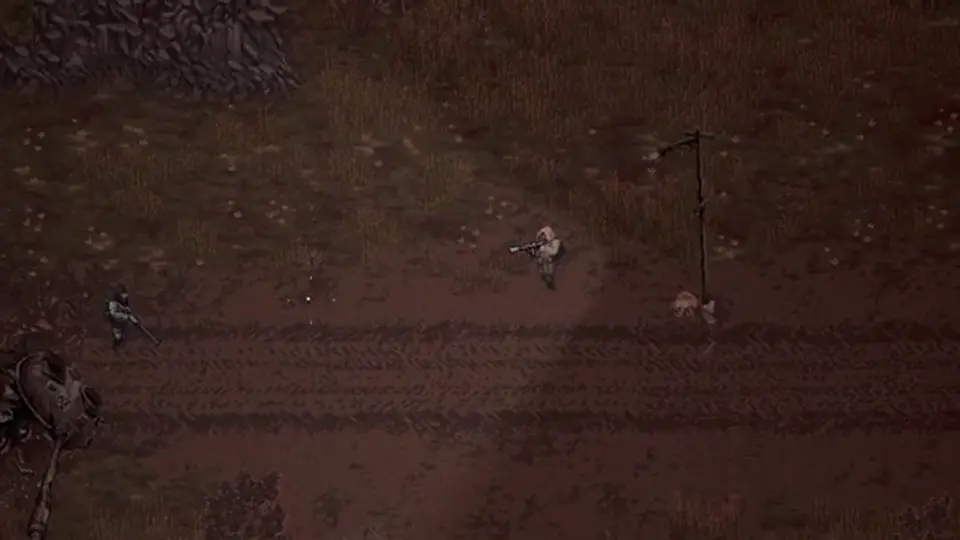
A beacon on irradiated swamp is a radiation kit. A beacon on a bunker hatch is a bunker raid. A beacon after dark is a night raid. The pin does not downgrade the biome. Route it on the map the same way you would route a contract: daylight if you can wait, filters if the ground is hot, oil if you expect a fight, extract plan before you leave the safehouse.
If the marker sits inside mist, do not “quick grab.” Mist is its own article because it is not a weather overlay you ignore for thirty seconds. Bring whatever scanner / filter kit that page and survival actually support in your build — and if you cannot kit it, skip the bag.
No “always 50 meters,” no “always the last doorway,” no “always visible through fog.” Pixel art and top-down camera make it tempting to quote a cone from a clip. Until we capture and re-time a marker in-session, distance and LOS stay TBA. Your job is: find the ping, kit for that tile, leave a path home.
Steam’s known-issues list for this Early Access build includes a line you should take literally: “Dead bodies are not saved in save files.” Community wiki says the backpack sits at a recoverable beacon. Both statements can be true at once, and both can drift as patches land. This wiki will not collapse them into a fake rule like “bodies vanish but bags always persist through quit.”
What you should do in practice: treat an in-session recovery as the reliable plan. If you die, kit, and walk back without closing the game, you are playing the loop the field guides describe. If you Alt+F4, crash, or “save and quit” on a corpse, verify what your build actually restored — marker, pack, empty tile, or a body that never came back. EA caveats are not flavor text here. They are the difference between a planned return and a ghost hunt.
A dead body is a world actor. A backpack is loot. A beacon is a HUD / map hint. Steam’s note names bodies. Community recovery language names backpack and beacon. If a patch saves markers but not corpses, or saves neither after a quit, only your current build can tell you. Check the map after a reload before you spend a filter on a tile that no longer exists.
Do not file this as “permadeath of the stash.” Stash safety is a separate claim and a stronger one in community guides. The known issue is about what the wasteland remembers, not what the safehouse remembers.
Early Access is expected to run on the order of 12–24 months with AI, QoL, and save behavior still moving. If Steam removes the known issue, believe the new notes. If Discord or a patch says bags now serialize, believe the patch and re-test once. This article’s job is to stop you from assuming a demo-era corpse run still works after a quit.
Community language is not shy: the safehouse stash is 100% safe. Rubles, guns, plates, filters, oil, and junk you already stored do not vanish because a mutant won a tile. That is the insurance policy of Scavland death. It is also why yolo recovery with an empty kit is irrational — you are risking a second backpack while the first one is still in the world, and you are doing it with gear you could have taken from a stash that was never in danger.
The official loop is Prepare → Explore → Scavenge → Survive → Return → Upgrade. Return is the step that converts a backpack into a stash. If you skip it because “one more toolbox,” loot density math does not matter. Death on the walk home parks the density on a beacon. Sell, repair, and standing unlocks all happen after a live extract — see repair and factions once the bag is actually home.
Contract items in the bag are not delivered. Journal jobs still want the object in a living inventory. If the contract is why you went out, dying on the delivery path is a contracts failure plus a recovery tax.
It cannot reach into the wasteland and vacuum the beacon. It cannot oil a jammed gun on a corpse. It cannot wear a filter for you. The stash is a vault, not a teleport. Recovery still requires a kit, a route, and a decision to leave if the tile is wrong.
Do not sprint back naked with the same empty kit that just died. That sentence is the entire anti-pattern. Backpack recovery is a short raid with a known objective: reach the beacon, pick up, leave. Kit it like a raid. Daylight beats a flashlight cone. A cheap gun you can feed beats a named relic at 12% condition. Oil belongs in the pocket because jams do not pause for sentiment. A gas-mask filter belongs in the pocket if the death tile was hot, swampy, or Mist-adjacent.
| Situation | Bring | Skip |
|---|---|---|
| Open settlement death, daylight | Cheap gun, ammo, oil, light pack | Heavy trophy rifle, extra junk slots |
| Irradiated swamp / filter death | Filter, cheap gun, ammo, extract path | Sightseeing detours, extra loot greed |
| Bunker hatch death | Oil, ammo, close-range gun you can feed | A second bunker clear “while we are here” |
| Night or poor vis | Wait for day if the bag can wait | Flashlight yolo into unknown sound |
| Mist on the pin | Treat as a mist raid or abandon | Empty-kit “I’ll be fast” |
| After a quit / crash | Check map first — Steam body-save issue | Assuming the corpse is still there |
Empty-handed stealth sounds clever because official EA lists stealth and takedowns. It is still a bad recovery plan if the death tile had guns pointed at it. Takedowns do not delete radiation. Suppression does not refill a magazine you refused to take from stash. Pack the minimum that wins one contact and one extract. Leave the upgrade fantasy for the next clean loop.
Weight still counts. Picking up the old backpack plus a new “while I’m here” toolbox is how recovery turns into a second overweight death. Loot priority on a corpse run is: the original pack, then leave. Springs and filters in the bag are why you came. Furniture is not.
Community notes (same as repair) say jams get ugly under 50% condition. Treat the number as community until your tooltip disagrees. Do not recover with the relic that jammed you in the first place unless you oiled it and can still feed it. A clean pistol from stash is a recovery tool. A jammed named rifle is a second beacon waiting to happen.
You abandon when the kit you can actually field is weaker than the tile that already killed you, or when you cannot verify the bag still exists after a quit. That is discipline, not cowardice. Stash is safe. The wasteland is not a storage unit with a service guarantee.
No ammo and no melee answer for the enemies that live there. No filter for a death that was clearly radiation or Mist. Night, and you are not willing to wait. Marker missing after a reload — believe the Steam known issue until a patch says otherwise. A bunker interior you cannot map because layouts are procedural and you already lost the room. Any of those is enough. You do not need all of them.
A-Life means the neighborhood can change while you are in the safehouse. The squad that killed you may still be there. They may have wandered. They may have been replaced. Plan for occupied, hope for empty, never assume empty.
Kit the return on survival, then sort what you kept on loot.
If the pin is underground, read bunkers first. If it is fog, read mist.
Hubs: guides · wiki. First loop: beginner guide.
No. Community guides: backpack drops at a beacon; stash stays 100% safe. Character wipe is not the Steam pitch.
Co-op is planned, not in Act I. Solo recovery only for now.
Timer TBA. Recover the same session if you can. After a quit, verify — Steam lists dead bodies as not saved in save files.
No. Empty-kit yolo is how you dump the pack twice. Cheap gun, ammo, oil, filter, daylight.
Treat Steam’s body-save known issue as live until your build proves otherwise. Do not invent a hidden stash refund.
Matched by build plan, shared topics, and guide progression — not random related links.